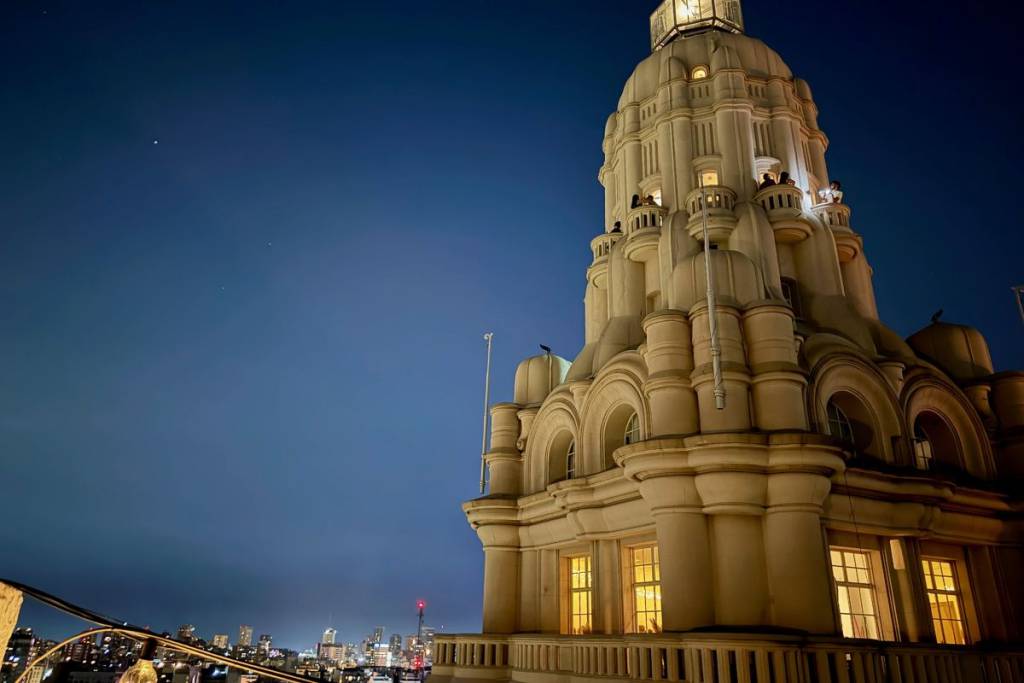

From the unmistakable Obelisk to the historic Cabildo, including gems like the Kavanagh, Buenos Aires is full of buildings that have become true local and national urban landmarks. But amid the daily hustle and bustle and the familiar facades, there are still colossal structures “hidden in plain sight.”
One of them is located just a few blocks from the National Congress. Standing 100 meters tall , with an imposing facade and one of the city’s most unique designs, the Barolo Palace invites visitors to discover a world inspired by one of the most famous literary works in history: Dante Alighieri’s*The Divine Comedy *.
A journey through hell, purgatory, and paradise
The guided tour of the Barolo Palace offers a chance to uncover the secrets of this historic building over the course of about an hour and a half, revealing architectural details that often go unnoticed by those observing it from the street.
The tour begins on the ground floor, representing Hell, and continues through Purgatory until reaching Heaven, passing through spaces designed with direct references to Dante’s now-legendary work.
24 October 2026 11:00 + more dates
Palacio Barolo
The grand finale of the experience takes place high above the city. From the 22nd floor, the Palacio Barolo offers 360° panoramic views of Buenos Aires, with a privileged vantage point overlooking some of the most iconic buildings in downtown Buenos Aires.
In addition to the guided tour, the Barolo Palace features other spaces open to the public. On the 16th floor is Salón 1923, a rooftop venue where you can enjoy breakfast, lunch, an afternoon snack, or dinner.
The palace that brought Dante to the heart of Buenos Aires
Opened in 1923, the Barolo Palace was born from the dream of Italian businessman Luis Barolo, who wanted to create a unique building that combined architecture, art, and symbolism. The project was led by Italian architect Mario Palanti, who incorporated numerous references to *The Divine Comedy* into the design.
At a time when Buenos Aires was striving to become a major international metropolis, its height of nearly 100 meters made it, for years, the tallest building in South America and one of the most innovative structures on the continent.
Designated a National Historic Monument in 1997, the Barolo Palace is today one of the city’s greatest architectural gems.