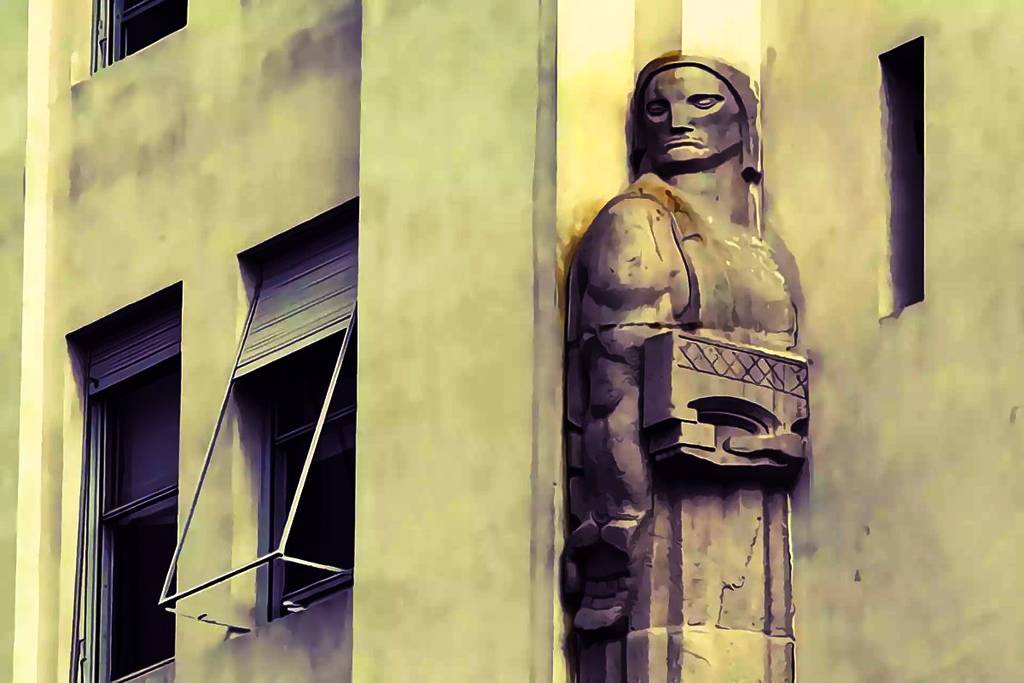
Buenos Aires is full of statues and tributes to heroes and historical figures. Many in the squares and parks and many others in some of the most beautiful palaces and buildings of the city. Those are notorious, but the statues that are known as the monument to bribery, monument to corruption or bribery, go unnoticed. You probably don’t know where the monument to bribery is and why it is in one of the most famous and well-known buildings in Buenos Aires.
Why the Monumento a la Coima is hidden in a rationalist building on 9 de Julio in full view of everyone.
The statues known as the Monumento a la Coima are neither more nor less than in the facade of the Ministry of Social Development, the most visible building on 9 de Julio Avenue after the Obelisk and that in its upper part on both sides, has the famous images of Evita.
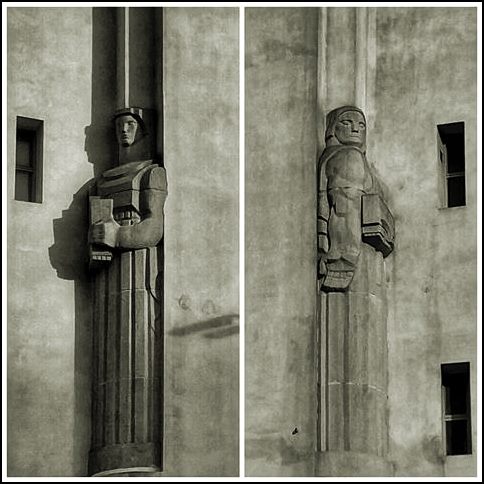
Surely you know these images, especially when they are illuminated at night, but the next time you pass by during the day, look carefully because on the sides of this building, at the bottom, there are two statues known as the Monumento a la Coima de Buenos Aires (Monument to the Coima of Buenos Aires ). Although it does not appear in the official plans nor was it inaugurated with any ceremony, there is a whole story -or urban legend? that is still alive today.
The Coima Monument: the story of a sculpture with an uncomfortable gesture
The piece was created by sculptor Troiano Troiani in the 1930s and shows a man with one hand outstretched and open palm, while the other hand holds a closed box, as if hiding something inside. The posture is clear and leaves no room for doubt: the statue seems to be receiving a bribe, a bribe, in a disguised but at the same time obvious way. For this reason, it was baptized as the monument to bribery.
Although neither Troiano Troiani nor the architect in charge of the construction of the building, José Hortal, explicitly confirmed it, it is believed that the sculpture was an ironic gesture of protest against the pressures and shady dealings that surrounded the construction of this rationalist style building. Over time, the two bribery statues became a kind of denunciation in stone, and surely when you pass by again, you will pay attention to them.
This monument to corruption in Buenos Aires is one of those hidden gems that do not appear in the more conventional circuits, but for you it is now a must-see. After all, there are not many capitals in the world that have in their main avenue a monument that combines art and history.