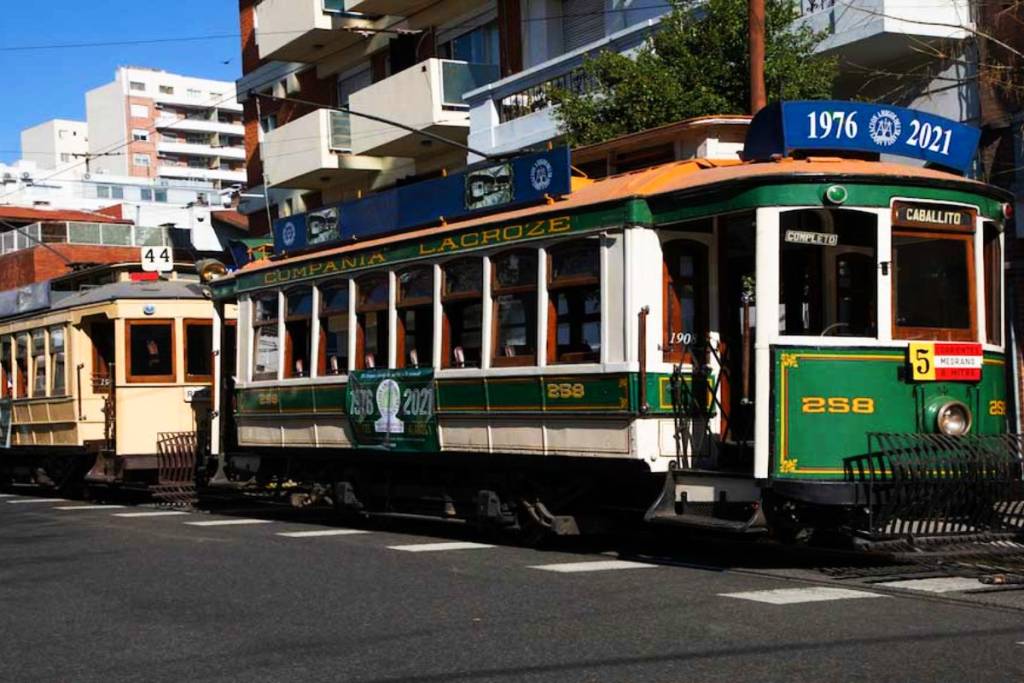

Rattan seats, uniformed conductors, and the unmistakable sound of the bell. How Argentina’s capital came to be known as the “City of Trams” and where you can ride these rolling relics for free today.
On April 22, 1897, the look and sounds of Buenos Aires began to change forever. On that day, the city’s first electric streetcar made its trial run, slowly phasing out the old horse-drawn carriages. This technological innovation fascinated the people of Buenos Aires and laid the foundation for a transportation network that would define the city’s urban identity in the 20th century.
Buenos Aires: The “City of Trolleys”
During its heyday in the 1920s and 1930s, Buenos Aires became known worldwide as the “City of Trams.” With nearly 900 kilometers of tracks and hundreds of lines crisscrossing every neighborhood, it was impossible to imagine life in Buenos Aires without them.
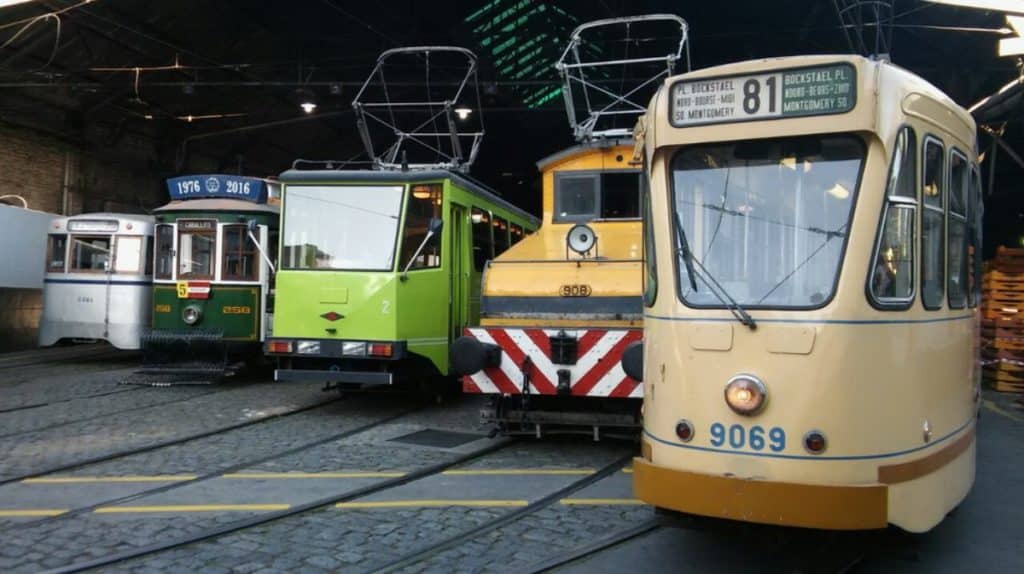
However, progress brought new players onto the scene. The rise of the bus and the motor car gradually pushed the streetcars into a corner, until in February 1963, by government decree, the service was discontinued and the tracks began to be removed or covered with asphalt. It seemed like the definitive end of an era.
A living museum in the Caballito neighborhood
Fortunately, a group of enthusiasts refused to let this history fade away. Thanks to the work of the Asociación Amigos del Tranvía (AAT), founded in 1976, Buenos Aires has recovered part of its rolling heritage.
Today, more than 120 years after that first electric ride, the Buenos Aires Historic Tramway offers a true “moving museum” in the Caballito neighborhood. Every weekend and on holidays, a fleet of impeccably restored original streetcars takes to the streets once again from the corner of Emilio Mitre and José Bonifacio.
Best of all, the ride is completely free. During the roughly two-kilometer journey, conductors and attendants dressed in period costumes punch the classic paper tickets, while passengers enjoy the wooden and rattan seats, letting themselves be carried away by the hypnotic clatter that was once the daily soundtrack of Buenos Aires.