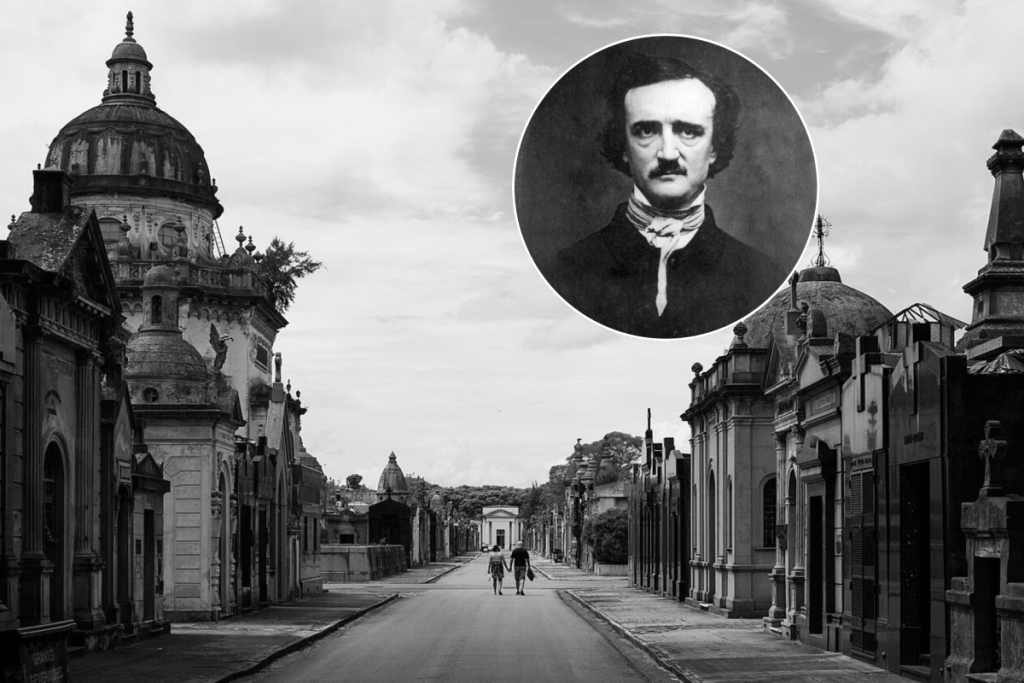

There are authors who never set foot in a city and yet seem to leave their mark on it. Edgar Allan Poe is one such case. Although he never visited Buenos Aires, his work found an exceptional reader here: Julio Cortázar, who devoted years to translating his short stories and novellas into Spanish.
Perhaps that is why it is not so difficult to find corners of the city that seem to have been plucked from the world of Edgar Allan Poe. From a funerary sculpture linked to one of Buenos Aires’s most unsettling legends to underground passageways where time seems to have stood still. Today, that atmosphere also comes to life in an immersive experience where, amid cocktails and characters inspired by Poe’s work, the audience becomes part of the story.
17 January 2027 17:00
La Trastienda
If you want to explore a Buenos Aires worthy of Edgar Allan Poe, here are five places you can’t miss.
Recoleta Cemetery
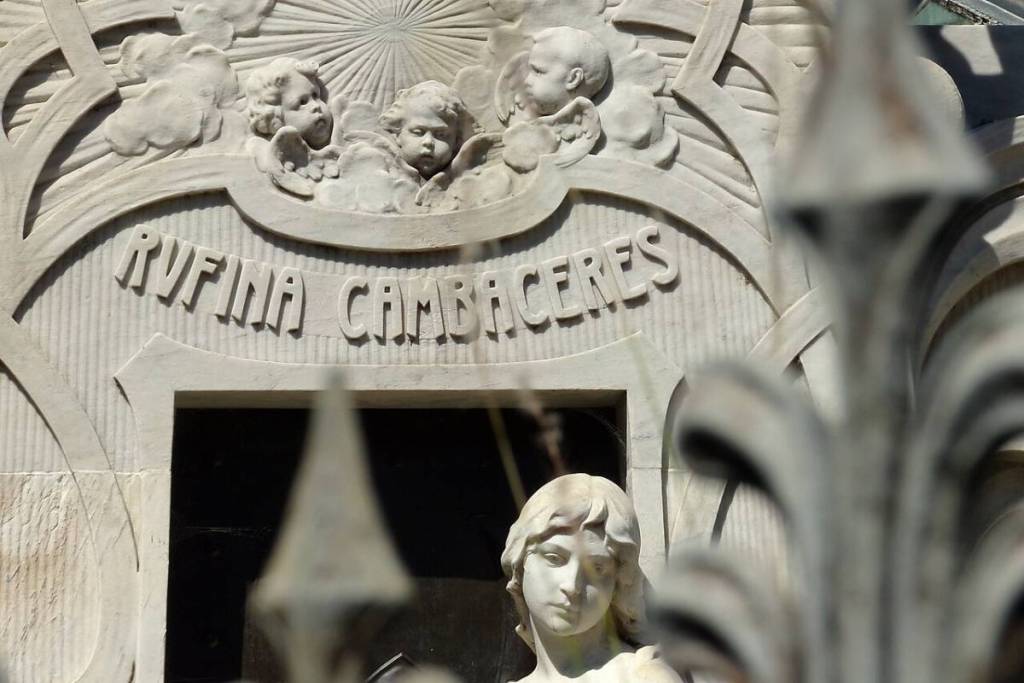
If there were a place in Buenos Aires capable of bringing one of the author’s greatest fears to life, it would be the Recoleta Cemetery. Among its more than 4,800 vaults and mausoleums lies Rufina Cambaceres. Legend has it that, after suffering an episode of catalepsy, she was presumed dead and buried at the age of just 19.
Days later, upon opening the coffin, his body was reportedly found displaced and bearing marks on the inside of the lid, fueling the belief that he had awakened underground and tried to escape. It was never proven, but the story turned his grave into one of the most visited in the cemetery and inevitably brings to mind“The Premature Burial,” the short story in which Poe explored the terror of being buried alive.
📍Junín 1760, Recoleta
Barolo Palace
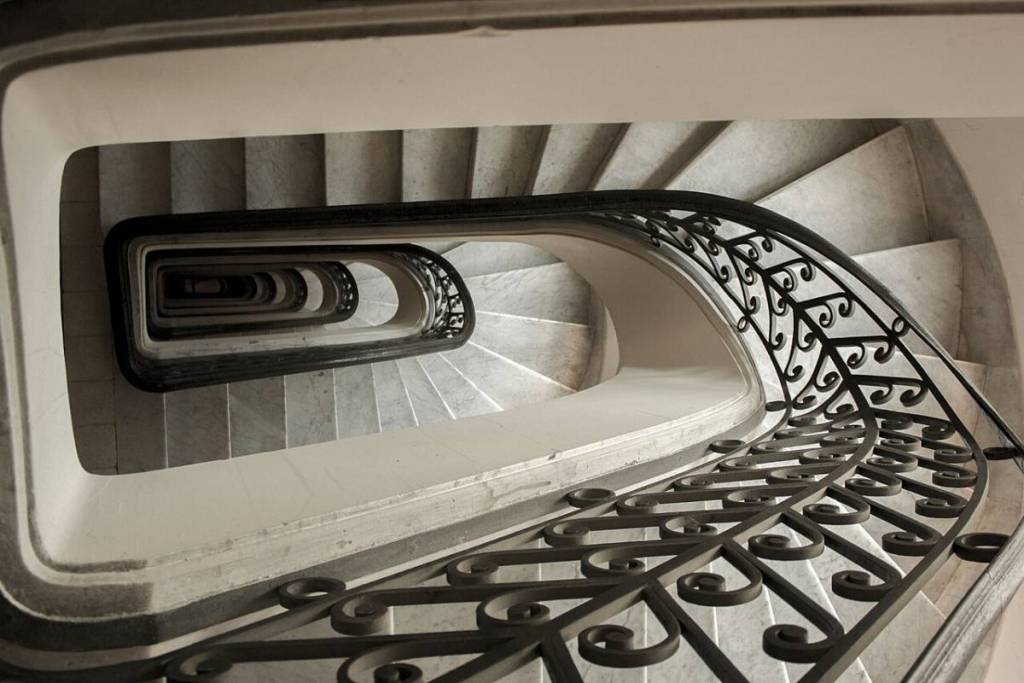
More than just a building, the Barolo Palace is a work steeped in symbolism. Inaugurated in 1923, architect Mario Palanti designed it inspired by Dante’s Divine Comedy, dividing the building into three major levels representing Hell, Purgatory, and Paradise.
Its interior, with dark passageways, monumental staircases, and architecture full of esoteric references, creates an atmosphere that is surprisingly close to Poe’s imagination.
📍Av. de Mayo 1370, Monserrat
El Zanjón de Granados
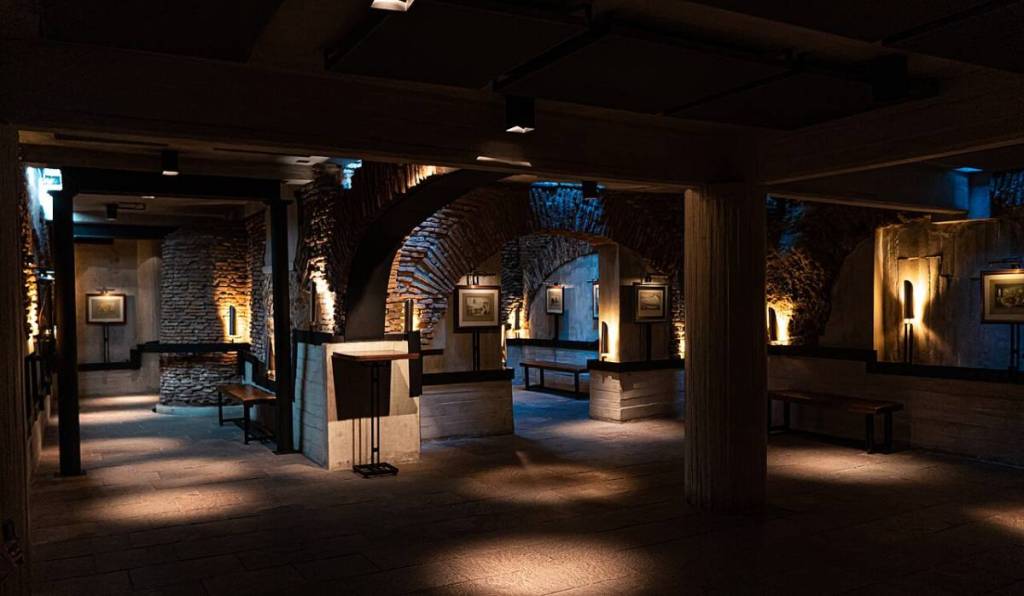
Beneath the cobblestone streets of San Telmo lies a Buenos Aires that remained buried for centuries. The Zanjón de Granados allows visitors to explore ancient tunnels and the remains of colonial buildings discovered during the restoration of a historic 19th-century mansion.
The dampness, the original bricks, and the sensation of moving through a city frozen in time inevitably bring to mind “The Cask of Amontillado” or“The Fall of the House of Usher.”
📍Defensa 755, San Telmo
Chacarita Cemetery
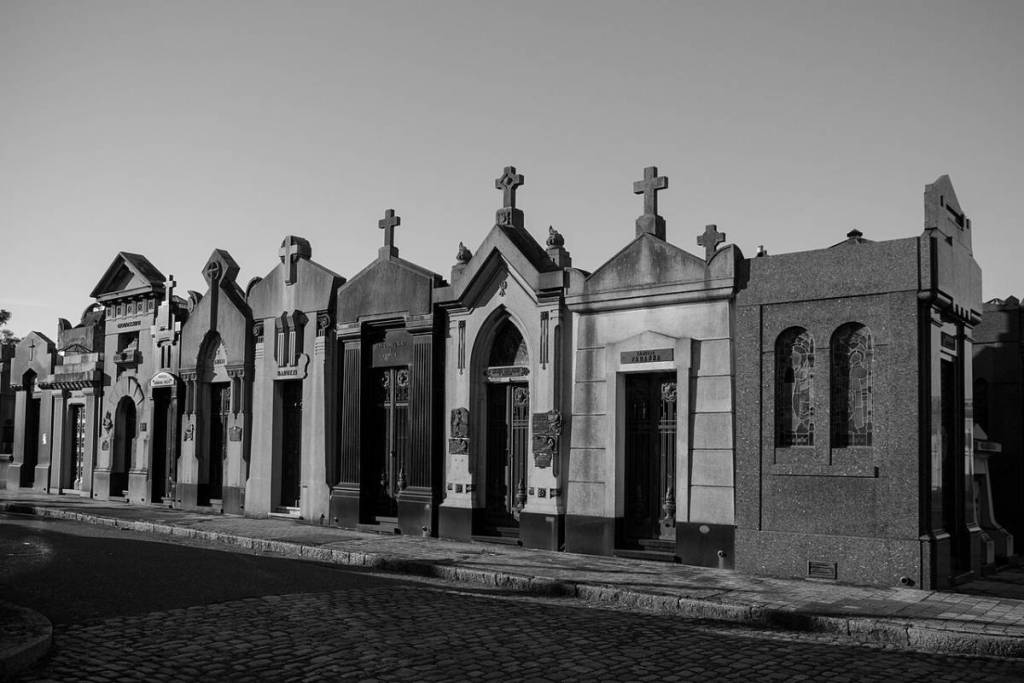
Less touristy than Recoleta but much larger, the Chacarita Cemetery is the largest necropolis in Buenos Aires. Opened in 1871, during the yellow fever epidemic, it houses thousands of vaults, underground galleries, and funerary monuments.
In addition to being the final resting place of figures like Carlos Gardel, strolling through its tree-lined avenues and funeral chapels allows you to discover another side of Buenos Aires’ heritage—one marked by silence, memory, and architecture that wouldn’t seem out of place in a Gothic novel.
📍680 Guzmán Ave., Chacarita
Galileo Galilei Planetarium

It may seem like the most unexpected place on this list. However, in addition to writing some of the most influential stories in horror literature, Edgar Allan Poe also devoted his final years toreflecting on the universe. In 1848, he published *Eureka*, an essay in which he reflected on the origin and structure of the cosmos decades before modern cosmological theories emerged.
The Galileo Galilei Planetarium, inaugurated in 1966 within Tres de Febrero Park, is a fitting reminder of this lesser-known facet of the writer. Its projections and scientific activities offer a different way to engage with an author whose curiosity extended far beyond mystery and the supernatural.
📍Av. Sarmiento and Av. Figueroa Alcorta, Palermo