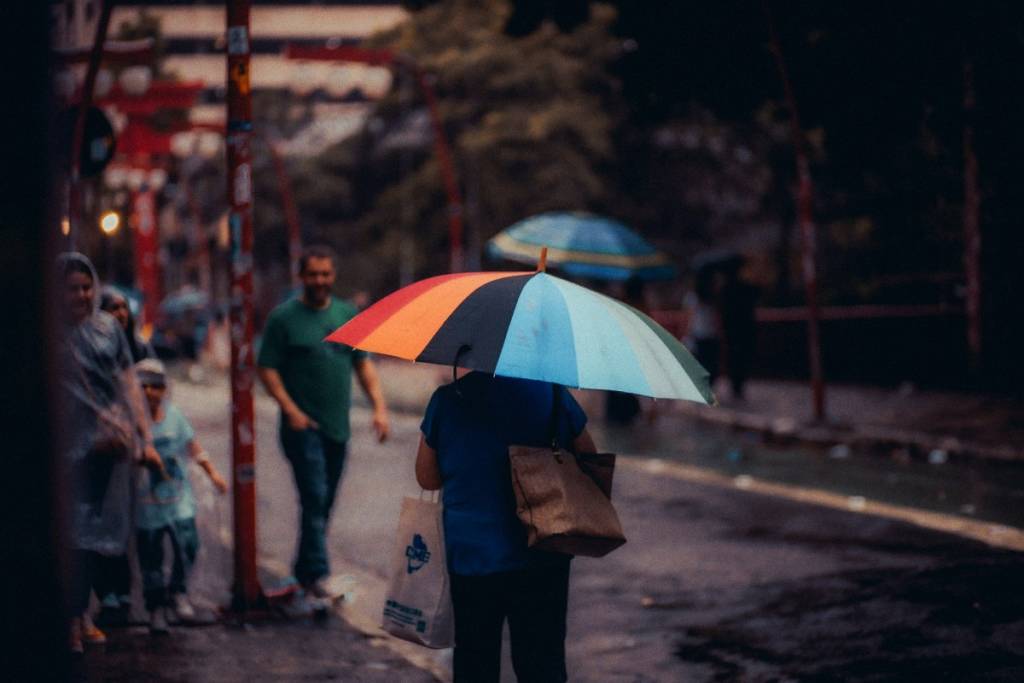

So where is spring ? If you’re wondering—just like every resident of Buenos Aires—what’s going on with spring in 2026, which keeps coming and going and hiding, we’ll tell you what you need to know about El Niño, why Buenos Aires started off cool, and what’s in store for us this summer
If you feel like you pulled out your short-sleeved shirts too early or that your umbrella has become a permanent fixture in your backpack, the whole city feels the same way you do. The start of spring in Buenos Aires was accompanied by gray days, cool air, and constant humidity . Far from being a coincidence, this weather has a clear scientific explanation, and the name will sound familiar to you: the El Niño phenomenon.
Why the sun is in short supply this spring
Perhaps for you, the term “El Niño” is more closely associated with global warming, and that’s true. The El Niño phenomenon is caused by the warming of the waters of the Pacific Ocean, but it is precisely this warming that affects the entire world—and Buenos Aires is no exception.
El Niño is driving a constant flow of moisture from the north and the Atlantic toward central Argentina, and the results are exactly what we’re experiencing these spring days:
- Overcast skies: a marked increase in low, dense clouds.
- Less solar radiation: The clouds act as a shield, preventing the sun from heating the surface with the intensity we’re used to.
What’s Ahead: What to Expect for the Rest of Spring and Summer
According to analyses by the National Weather Service, the trend of humidity and unstable weather will continue over the next few weeks, so keep bringing your umbrella everywhere—and a sweater just in case—because here’s what we can expect from the weather for the rest of spring in Buenos Aires:
- More frequent and intense rains: The likelihood of isolated but rapidly developing thunderstorms remains.
- Moderate temperatures: Highs above 20° won’t start appearing consistently until well into November.
Summer in Buenos Aires: What Will Happen When the Thermometer Rises
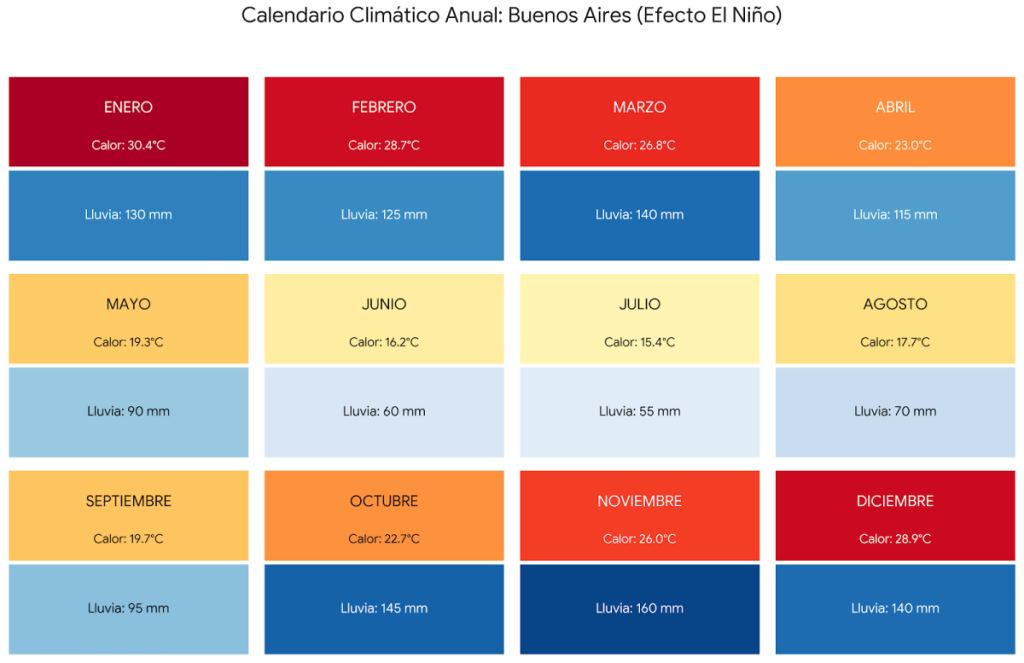
We’ve put together this weather calendar so you can clearly see what the rest of the year has in store weather-wise (blue: rain, red: heat). Looking ahead to December, January, and February, the combination of El Niño and high summer temperatures brings a mix of heat, humidity, and very powerful but short-lived storms:
- High wind chill: The accumulated humidity brings hot, heavy, and muggy days.
- More intense summer storms: The clash between accumulated heat and humidity often leads to heavy rain in short bursts.
- Rapid shifts: Days of sweltering heat followed by relief after the storm.
An Urban Survival Guide for Gray Days
While we wait for the sun to settle in for good, luckily Buenos Aires offers the perfect setting to make the most of the cool weather:
- Specialty Coffee Tour: The perfect excuse to take refuge in neighborhood coffee shops and sample pastries (treating yourself to something sweet can help lift your spirits amid the heat and humidity).
- Afternoons at museums and galleries: Visit the exhibitions at the Recoleta Cultural Center, the Bellas Artes, or the MALBA and take advantage of the air conditioning.
- Travel umbrella: Always keep it handy; spring showers will pop up without warning.